Why does the aging microbiome lose its balance?
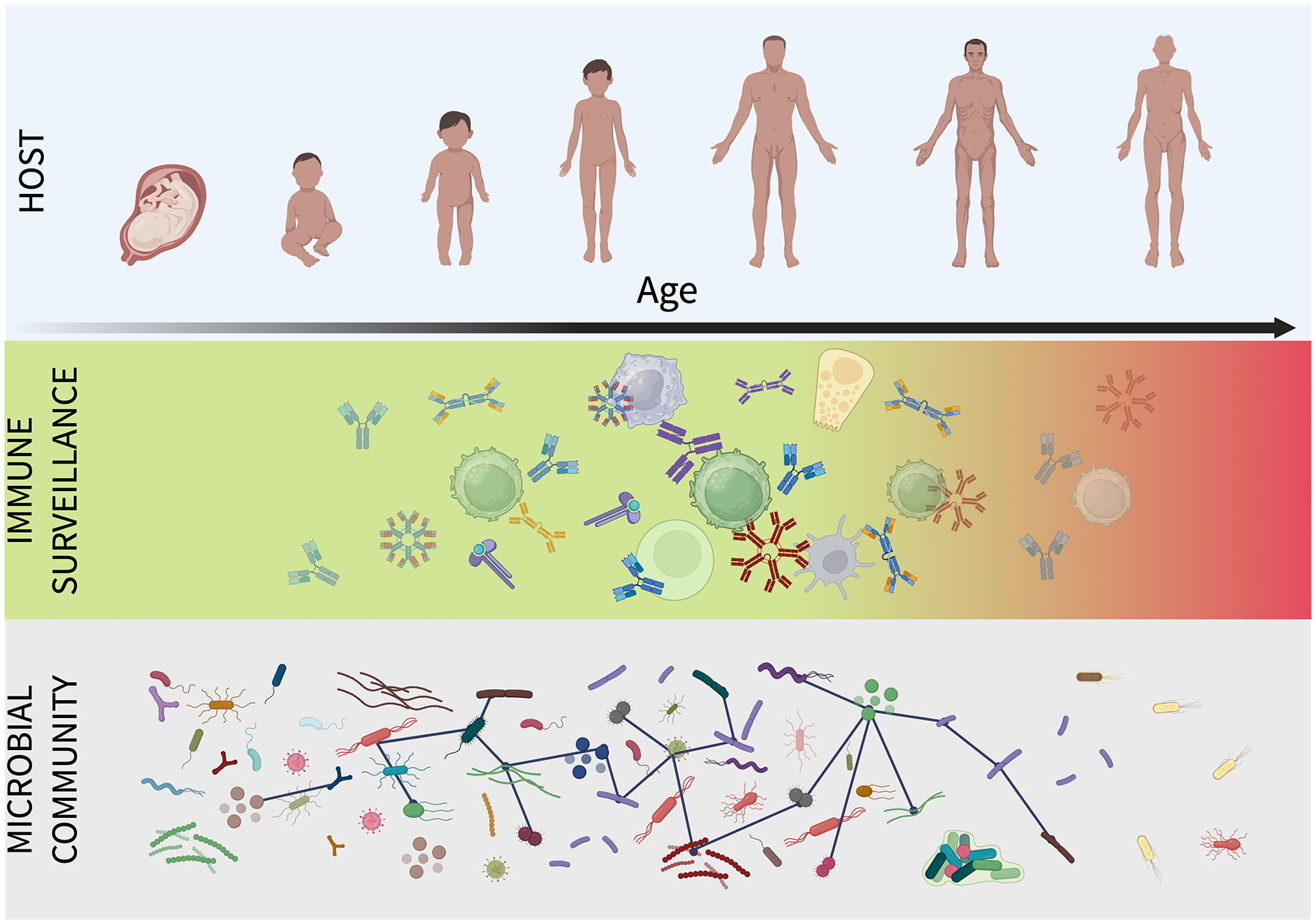
The host-associated microbiome is compositionally stable across most of the life span, then deteriorates sharply in late life. This late-life collapse, often called dysbiosis, is associated with metabolic dysfunction, inflammation, and disease, but its underlying cause has been hard to pin down. The standard framing treats the microbiome as an autonomous ecosystem that drifts with time. We argue this framing is incomplete.
In our new Unsolved Mystery in PLOS Biology, Siqi Liu, Flávio Silva Costa, and I integrate evidence from immunology and ecosystem ecology to make a different case: the immune system is an active ecological force shaping microbial community structure throughout adult life, and immunosenescence is a primary driver of age-associated dysbiosis. The aging gut does not simply accumulate the wrong microbes. It loses the capacity to keep the right ones in place.
This reframing has practical consequences. If microbial communities collapse because immune surveillance fails, then strategies that target community composition in isolation, such as probiotics, prebiotics, or fecal transplantation, will at best treat symptoms. Restoring or compensating for declining mucosal immune function should be part of any serious intervention against age-associated dysbiosis, alongside ecologically informed approaches to microbiome management.
The paper is open access and free to read here.